Medium Voltage Cable: Why Electric Field Control, Not Copper, Defines the Class
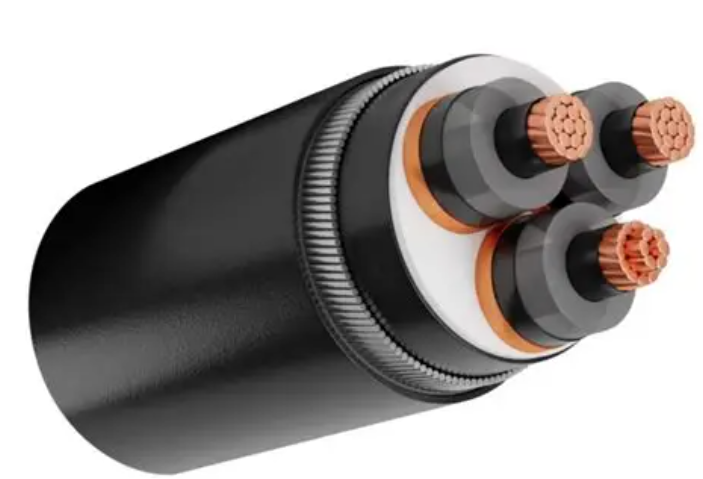
Below 1 kV, a cable mostly needs conductivity. Above 3.6 kV, the dominant design problem changes: the insulation now sits in a strong radial electric field, and everything that matters — manufacturing, testing, jointing — is organised around controlling that field. Medium-voltage power cables are defined by IEC 60502-2, covering rated voltages from 3.6/6 kV to 30/36 kV; classes above 36 kV move to IEC 62067. The voltage code is engineering information, not decoration: U0/U states the design phase-to-earth and phase-to-phase voltages, and U0 must be chosen against the system's earthing arrangement. On an effectively earthed network, a 15 kV system uses 8.7/15 kV cable; on an isolated or compensated network, a single phase-to-earth fault can hold healthy-phase insulation at line voltage for hours, so the same system is specified at 12/15 or 15/15 kV. Selecting by phase-to-phase voltage alone is a common and expensive error. That voltage stress explains the construction. XLPE insulation — roughly 3.4 mm nominal at 6/10 kV and 4.5 mm at 8.7/15 kV — is applied in three co-extruded layers: a conductor screen, the insulation, and an insulation screen, cured dry to keep interfaces smooth. Semiconducting screens make the field radial and confine it; a copper wire screen sized for charging and earth-fault current completes the coaxial geometry. Voids or metallic contamination left inside the insulation become partial-discharge sites, which is why factory routine testing measures discharge at 1.73 U0 with an acceptance limit of 10 pC per cable, while terminations and joints are held to the stricter 5 pC. Field acceptance uses very-low-frequency (VLF) withstand testing at 0.1 Hz with simultaneous partial-discharge and tan-delta measurement. Because reactive charging current falls in proportion to frequency, a long feeder can be tested with a small trailer-mounted set instead of a substation-sized power-frequency plant — while the test remains sensitive to water treeing, the moisture-driven ageing mechanism that ends most in-service MV cables. Specify the U0 for the real earthing arrangement, verify the screens, and read the pC value. That is how a medium voltage cable is bought correctly.
China XINYA Power Cables Co., Ltd Email: [email protected] Email: [email protected] whatsapp: +86 15289885778 Website: https://www.power-cables.com