
Direct Buried Cable Performance Is Decided by the Trench Not the Drum
direct buried cable, underground power cable, cable burial depth, trench backfill thermal resistivity, armoured cable direct burial
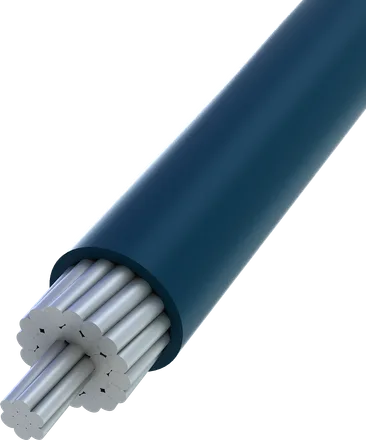
A cable is called direct buried by what surrounds it. Once backfill closes over the trench, nothing can be inspected, replaced or measured — so the specification lives in two places: the cable construction rated for soil contact, and the trench section that protects and cools it for decades. Construction first. Buried cable takes radial soil load and excavation risk, so practice converges on armour — double steel tape for straight runs — under a polyethylene oversheath rather than PVC, because polyethylene resists soil chemistry and moisture far better. Longitudinal water blocking matters equally: a sheath nick during laying lets groundwater travel along the cable for metres, and in XLPE product that moisture starts tree growth long before water reaches the joint. The trench is a five-layer structure. Depth to the cable sheath: 0.7 m minimum in ordinary ground, 1.0 m under cultivated land, below the frost line in cold regions. Beneath the cable, 100 mm of soft soil or sand, free of sharp stone; the same thickness above it. Over the sand, concrete or brick covers extending at least 50 mm past each side of the cable. Roughly 300 mm below final grade, warning tape names the route to the next excavator; marker posts repeat it along straight runs and at every joint. Heat is the invisible requirement. Buried rating tables assume soil thermal resistivity near 2.5 K·m/W; engineered imported backfill compacted in 300 mm layers holds 1.2–1.5, while dumped rock or dry sand can double the design figure — and the cable then runs permanently hotter than calculated. Separation follows the same logic: roughly 0.1 m between parallel low-voltage circuits, 0.5 m at crossings, and never directly above or below another service. Close the trench only after the sheath withstand test passes, continuity is measured and the tracer wire is in place.
China XINYA Power Cables Co., Ltd Email: [email protected] Email: [email protected] whatsapp: +86 15289885778 Website: https://www.power-cables.com