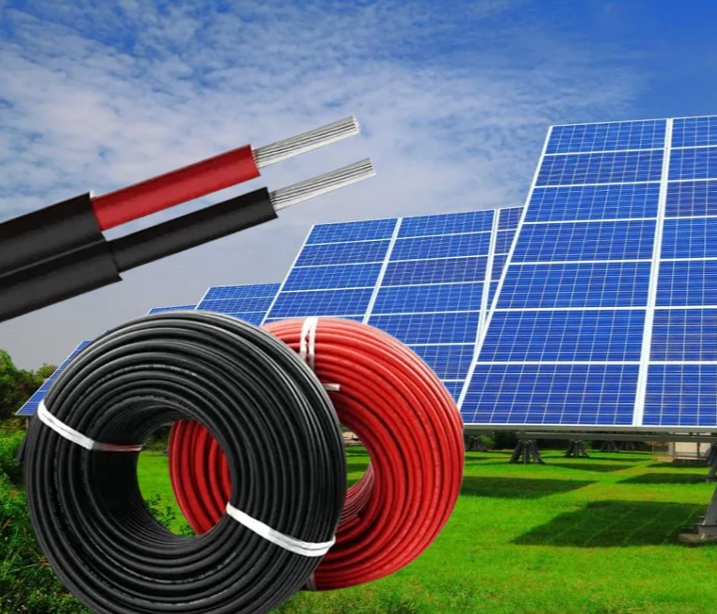
PV Cable and Solar Cable Are Defined by Stresses AC Cable Never Meets
PV cable, solar cable, EN 50618 H1Z2Z2-K, UL 4703 PV wire, IEC 62852 solar connector
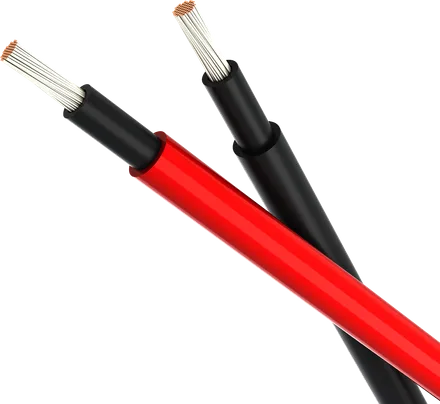
PV cable and solar cable describe the same product family: the DC wiring between modules, combiners and inverters. What separates it from ordinary low-voltage cable is not sunlight alone — it is that direct current applies three stresses alternating-current building wire was never asked to survive. First, the arc will not self-extinguish. An AC arc passes through zero current a hundred times a second and can quench there; a DC arc has no zero crossing, so once an air gap forms — a disconnector pulled under load, a loose crimp, a rodent-nicked conductor — the arc burns continuously until something physically interrupts it. That is why PV connectors are governed by IEC 62852 and UL 6703 as testable components with interrupting behaviour, and why IEC TR 63225 exists to warn that connectors of identical appearance from different manufacturers are not proven compatible when mated. Second, humidity under constant polarity drives electrochemical migration. With DC bias, moisture and contaminants present, metal ions drift from the anodic conductor and can precipitate as conductive filaments between conductors — a failure mode observed in polymeric dielectrics for decades and largely absent at 50 or 60 Hz, where polarity reverses before ions traverse the field. This physics is why PV cable standards run dielectric withstand with the sample immersed in water, and why halogen-free, low-tracking compounds matter at 1500 V DC conductor-to-conductor stress in dirty coastal or desert air. Third, the electrical stress never relaxes: no capacitive discharge window, no natural cooling interval between peaks. Continuous field plus 70-90 °C roof surface heat plus UV flux is why EN 50618 type-tested constructions crosslink the polymer and age the compound for 720 hours of xenon arc before certification, and why UL 4703 PV wire carries separate dry and wet temperature ratings, up to 150 °C dry. When comparing PV cable offers, ask which DC-specific tests back the certificate: wet dielectric, arc-rated mating system, UV ageing. Cross-section and price are the easy half of the decision.
China XINYA Power Cables Co., Ltd Email: [email protected] Email: [email protected] whatsapp: +86 15289885778 Website: https://www.power-cables.com