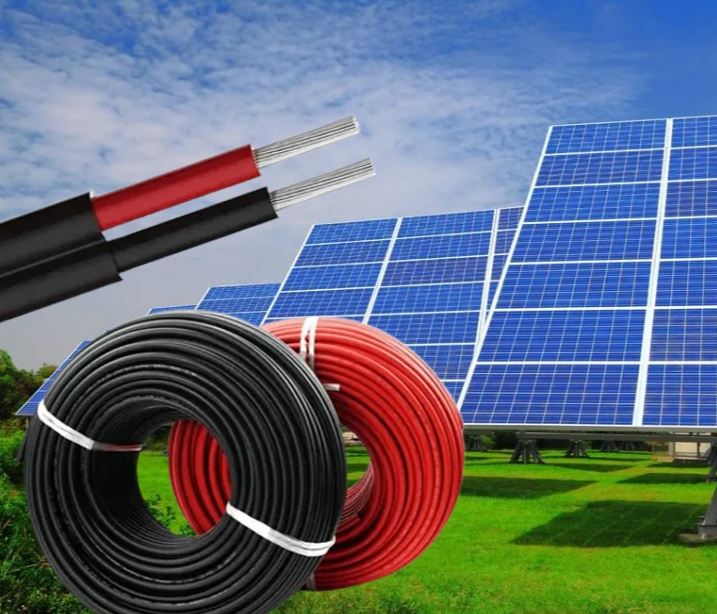
Photovoltaic Cables: Key Specifications for Reliable Solar DC Wiring
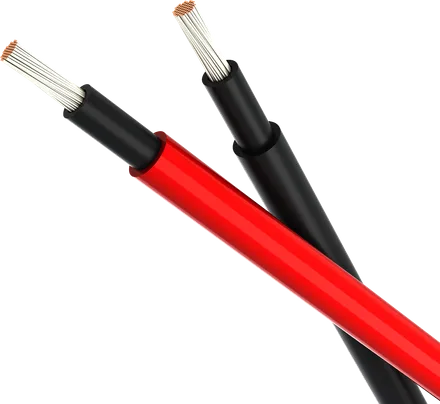
Photovoltaic cables connect solar modules, combiner boxes and inverters on the DC side of a PV system. They carry unidirectional voltage continuously, sit under ultraviolet radiation, and operate in temperatures that exceed the range of ordinary building wire — which is why PV systems require cables engineered to a dedicated standard. The European reference is EN 50618, whose harmonised type designation is H1Z2Z2-K: a flexible, stranded tinned copper conductor with halogen-free cross-linked (XLPO) insulation and sheath. Cross-linking by irradiation converts the polyolefin into a thermoset, giving a rated temperature range of −40 °C to +90 °C, a conductor limit of 120 °C, and short-circuit tolerance at 250 °C for 5 seconds. Rated voltage is AC 600/1000 V and DC 1500 V, verified by a 6.5 kV AC dielectric test. Equivalent schemes include IEC 62930 internationally, UL 4703 for North America, TÜV 2 PfG 1171 certification, and NB/T 42073 in China. Selection involves two calculations. Ampacity must be corrected for ambient temperature and mounting method per IEC 60364-5-52. Voltage drop, often overlooked, should stay within 2 % on the DC side; string wiring typically uses 4 mm² or 6 mm², feeder runs 10–16 mm². Long runs can make a thermally adequate cable electrically inefficient, so length must be checked before fixing the cross-section. Installation determines service life more than the certificate does. Keep the bending radius above five times the cable diameter, avoid sharp edges and abrasion, secure runs against wind vibration, and use only EN/IEC 62852 connectors rated for the same DC voltage. On delivery, verify sheath print markings against the certification number and request lot routine-test records. Specification discipline, not cable price, is what allows a photovoltaic cable to last as long as the modules it serves.
China XINYA Power Cables Co., Ltd Email: [email protected] Email: [email protected] whatsapp: +86 15289885778 Website: https://www.power-cables.com