Low-Voltage and Medium-Voltage Cables — Where the Design Actually Changes
Low-Voltage and Medium-Voltage Cables, low-voltage and medium-voltage cables, IEC 60502-2 medium voltage cable, semiconductive screen partial discharge, cable voltage drop and ampacity derating, XLPE cable VLF tan delta testing,
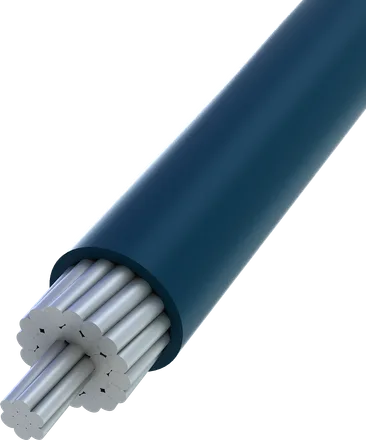
The boundary between low-voltage and medium-voltage cables is not just a number on a nameplate; it marks where the design, the test regime and the failure modes all change. IEC 60502-1 covers rated voltages from 0.6/1 kV up to 1.8/3 kV, while IEC 60502-2 begins at 3.6/6 kV and runs to 30/36 kV. The naming itself carries information: the first figure is phase-to-earth stress, the second phase-to-phase, and insulation thickness is built around the higher value plus a margin for earth-fault duration. Below 1 kV the insulation performs a dielectric job only, so PVC or XLPE compounds, core count, armour choice and a general-purpose sheath settle the specification. Cables here are sized by load current, derating and voltage drop, and terminated with lugs a competent technician can fit with hand tools. Once a cable crosses into medium voltage, electric field control dominates. Each core receives an inner semiconductive screen over the stranded conductor and an outer screen over the insulation, co-extruded and cross-linked in one pass, because trapped gas or a loose interface starts partial discharge long before theoretical breakdown. Tree-retardant XLPE, swelling tapes and a moisture-tight polyethylene sheath follow, while copper tape or screening wires must carry the prospective earth-fault current. Selection adds surface field limits, sheath bonding and the circulating current that single-core systems induce in armours, plus screen thermal stability. Routine testing moves from a simple insulation resistance check to a 2.5 to 4 U0 withstand with partial discharge below 10 pC. Installation discipline tightens in step: bending radius rises to fifteen or twenty times diameter, jointing needs controlled humidity and a stress cone that grades the field at the cut-back, and a VLF or tan delta survey after laying reveals damage the megger test misses. Read the test certificate on every drum; it is the shortest way to confirm the cable matches the class purchased.