Low Medium and High Voltage Cable Are Three Different Engineering Problems
low medium high voltage cable, IEC 60502 cable, voltage class XLPE cable, cable partial discharge limit, power cable voltage rating
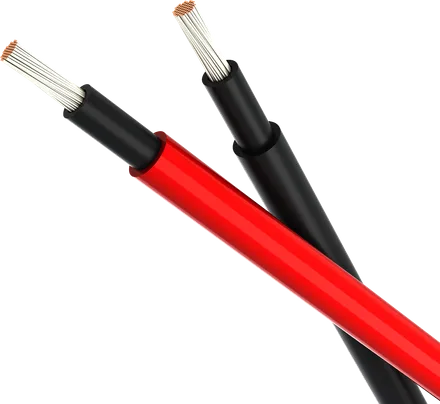
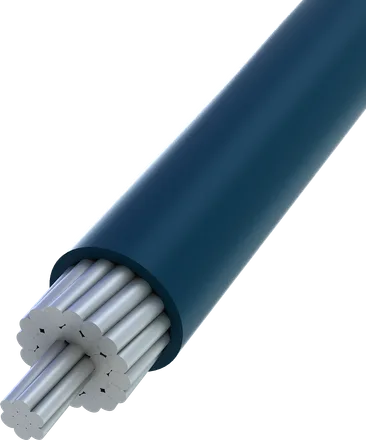
Voltage class is not a scale of insulation thickness. Each boundary a cable crosses changes which physical quantity dominates the design, the tests and the failure mode. IEC 60502-1 covers 1 kV (Uₘ = 1.2 kV) and 3 kV (Uₘ = 3.6 kV); IEC 60502-2 runs from 3.6/6 kV to 30/36 kV; IEC 60840 takes above 36 kV to 150 kV (Uₘ = 170 kV); IEC 62067 covers above 150 kV to 500 kV. Below 1 kV, the governing numbers are thermal and mechanical. Field stress in the insulation is low enough that no semiconducting screen is required, and design reduces to ampacity after installation correction, voltage drop within the 3–5 per cent limits of IEC 60364-5-52, short-circuit withstand from the adiabatic equation, plus sheath chemistry for the environment. Routine verification is a high-voltage withstand — 6.5 kV for 1500 V DC photovoltaic insulation, 3.5 kV for 0.6/1 kV — and no partial-discharge criterion is imposed at all. From 3.6/6 kV upward, the electric field takes over. Triple-extruded semiconducting screens make the field radial and confine it, voids become a measured defect rather than a cosmetic one, and routine testing adds partial discharge capped at 10 pC. Insulation thickness is set by the design phase-to-earth voltage U0, which is why the same 15 kV system needs 8.7/15 kV cable when effectively earthed and 15/15 kV cable when not. Above 36 kV, a third system appears outside the insulation: the sheath. Cross-bonding, bonding boxes, protectors and sheath loss factors enter the ampacity calculation, partial discharge tightens to 5 pC, and acceptance extends to prequalification of the whole cable system plus field resonant testing. Accessories grow to rival the cable in cost and, more often than the drum, in responsibility for the failure. The buying error is borrowing logic across boundaries: sizing a medium-voltage feeder from a low-voltage table ignores screens and pC; specifying high-voltage cable without a bonding scheme ignores the loss that will overheat it. Read the class first — it tells you which calculation cannot be skipped.
China XINYA Power Cables Co., Ltd Email: [email protected] Email: [email protected] whatsapp: +86 15289885778 Website: https://www.power-cables.com