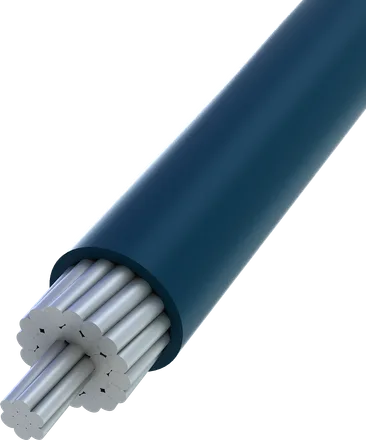
A flexible power cable uses fine strands, typically Class 5 or Class 6 conductors under IEC 60228, so it bends around moving machinery without work-hardening the copper. That flexibility has limits, and misuse shortens life quickly. In a flexible power cable, failure usually begins where strands fatigue: repeated tight bending beyond the rated radius cracks outer strands first, then insulation, then conductor. For continuous flexing, plan around six to ten times overall diameter and anchor the cable so twisting, torsion and pull never reach the terminations. Match the jacket to the motion. PVC sheaths stiffen in cold and soften near heat, while EPR, TPE and silicone compounds stay flexible across a wider temperature band and survive oil, abrasion and repeated flex cycles. Robot arms, festoon systems and tethered tools need defined cycle life and clearance from sharp edges. Loose strands at terminals raise resistance and overheat, so ferrules and properly crimped connections matter more on flexible conductors than on solid ones.
China XINYA Power Cables Co., Ltd Email: [email protected] Email: [email protected] whatsapp: +86 15289885778 Website: https://www.power-cables.com