Flame Retardant Cable Works by Chemistry and the Bundled Test Proves It
flame retardant cable, halogen free low smoke cable, IEC 60332-3 category A, aluminium trihydrate flame retardant,LSZH cable
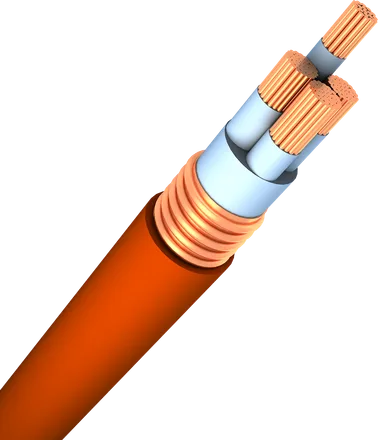
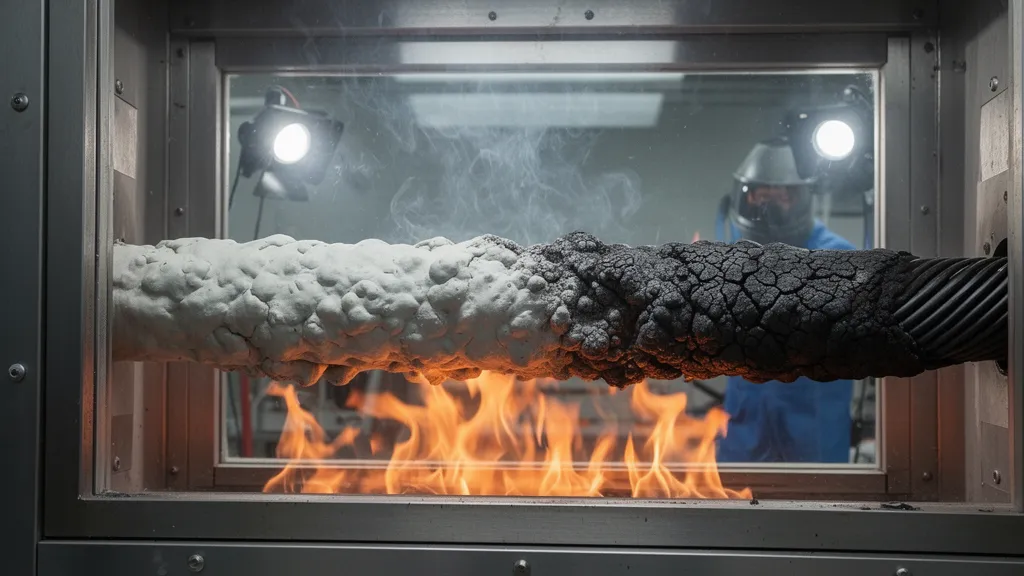
A flame retardant cable does not stop burning; it slows ignition and limits how far flame travels along a bundle. Understanding how that behaviour is produced — and how it is measured — prevents the two most common specification errors: buying halogen chemistry unknowingly, and trusting a single-cable test for a tray full of circuits. The chemistry divides in two. Halogenated compounds (PVC with chlorine, or additive bromine-antimony systems) work in the gas phase: they interrupt the radical chain reaction of combustion at low loading, which is why flame-retardant PVC is cheap and effective. Their cost appears in a fire — hydrogen chloride gas, dense smoke, corrosive attack on electronics. The halogen-free alternative is fill chemistry: aluminium trihydrate decomposes near 200 °C, magnesium hydroxide near 330 °C, both absorbing heat and releasing water vapour that dilutes fuel gas and leaves a protective oxide layer. The penalty is loading — roughly 55 to 65 per cent by weight — which lowers mechanical strength, raises compound cost, and forces the polymer designer to choose between flexibility, fire performance and price. Magnesium hydroxide suits higher processing temperatures; nano-ATH and phosphorus-nitrogen intumescents chase the same result at lower loading. Measurement divides the same way. IEC 60332-1-2 tests one cable — a basic pass that a bundled installation can still fail. IEC 60332-3 tests bunches on a ladder, sized by non-metallic volume per metre: category A at 7 litres with 40 minutes of flame, B at 3.5 litres, C at 1.5 litres with 20 minutes. The pass line is char height — damage must stop below 2.5 metres above the burner. Halogen-free claims need the IEC 60754 pair: acid gas evolution under 5 mg/g, absorption solution pH at or above 4.3 and conductivity at or below 10 µS/mm; smoke density runs on IEC 61034. None of this keeps a circuit alive in fire — that is circuit integrity, tested separately. A flame retardant cable protects the escape route; a fire resistant cable protects the pump.
China XINYA Power Cables Co., Ltd Email: [email protected] Email: [email protected] whatsapp: +86 15289885778 Website: https://www.power-cables.com