Fire Resistant Cable Means Three Different Things to Three Different Standards
fire resistant cable, circuit integrity cable, IEC 60331 fire test, DIN 4102-12 E90 cable, mineral insulated cable
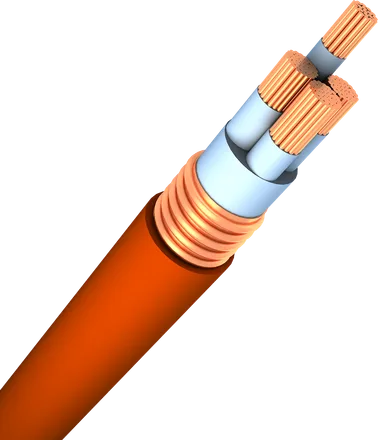
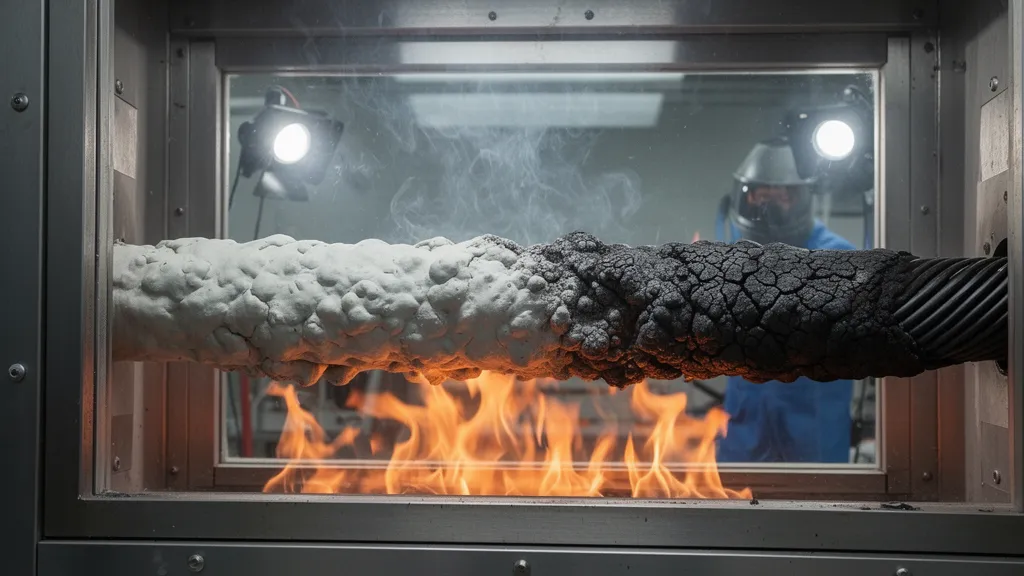
Ask three engineers what a fire resistant cable is and receive three answers, because the phrase covers three independent properties, each proven by its own test family. A tender that does not say which property it wants cannot be evaluated — only guessed at. Property one: the cable does not feed the fire. Flame propagation is measured by IEC 60332. Part 1-2 tests a single cable on a ladder; part 3 tests a bundled installation — category A simulates roughly 7 litres of non-metallic material per metre of sample under a 40-minute flame, judging how far the char reaches. A cable can pass single-cable tests and fail as a tray full of cable, which is why specifications quote the part and category, not the phrase "flame retardant." Halogen-free compounds add the companion questions of smoke density and acid gas per EN 50575 Euroclass sub-classes. Property two: the circuit keeps conducting inside the fire. That is circuit integrity, tested by IEC 60331 at about 750 °C with current flowing, EN 50200 PH ratings at roughly 840 °C with shock, and BS 6387 categories adding water spray and hammer impact. The workhorse is mica tape over the conductor: an inorganic silicate that does not burn and sinters into a ceramic insulating shell once the organic layers above it char away. Property three: the whole installed line survives. DIN 4102-12 certifies systems — cable plus tray plus fixings — for declared functional integrity periods, the familiar E30 to E90, under a general type approval. An E90 claim resting on the drum alone, without the certified support system, is incomplete. At the inorganic extreme, mineral insulated cable replaces polymer entirely: copper conductors, compacted magnesium oxide, copper sheath. MgO melts near 2800 °C and copper sheath at 1085 °C, so integrity survives any building fire until the metal itself fails — IEC 60702 sets its continuous use at 105 °C only because of terminal sealing, not the insulation. Write the property, the test standard and the duration into the specification. "Fire resistant" alone specifies nothing.
China XINYA Power Cables Co., Ltd Email: [email protected] Email: [email protected] whatsapp: +86 15289885778 Website: https://www.power-cables.com