Cable Manufacturing: Where Quality Is Decided Before the Test Certificate
cable manufacturing, XLPE crosslinking curing line, triple-head extrusion semiconductive screens, IEC 60228 conductor resistance testing, partial discharge routine cable testing,
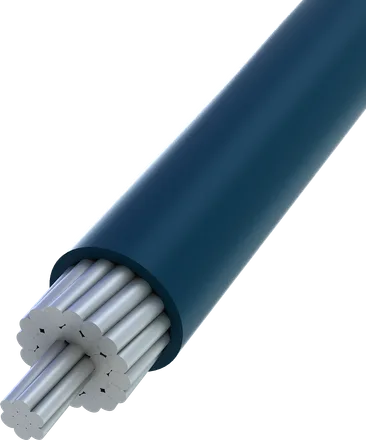
Cable manufacturing turns copper rod and polymer pellets into products rated to survive decades, and most quality is fixed by a handful of process decisions long before any test certificate is printed. It begins with the conductor. Rod is drawn, annealed and stranded; lay length and compaction set DC resistance against IEC 60228 and determine how the finished core accepts a crimp. Over-annealed strand loses spring-back at the terminal, under-annealed strand splits at its edges. Insulation is extruded over the conductor — at medium voltage, together with the inner and outer semiconductive screens through a triple-head line. Crosslinking follows: silane or electron beam for most low-voltage work, dry-cure nitrogen tubes at high temperature for XLPE medium-voltage cable, where the time-temperature profile decides whether gel content reaches the 70–90 percent window. Volatiles and peroxide by-products must then be drawn out under vacuum, because anything left in the wall becomes a water tree in service. Layer discipline continues downstream. Tension control keeps armour tape from gapping or overriding, sheath thickness is tracked in line against extruder output, and every metre leaves with a print legend naming standard, size and voltage class. Acceptance is layered. Routine tests on each drum cover conductor resistance, high-voltage withstand with partial discharge below ten picocoulombs, insulation resistance, dimensions, and spark testing of low-voltage sheaths. Type tests per IEC 60502, 60840 or EN 50618 add thermal stability, hot set, ageing and short-circuit behaviour. Eccentricity — how evenly insulation surrounds the conductor — stays bounded near fifteen percent; a thin side is invisible on a nameplate but decisive during a fault. For anyone sourcing cable, the practical read is simple: ask which parameters are measured in-line versus sampled, request routine test values rather than pass marks, and confirm the curing route behind any XLPE claim.
China XINYA Power Cables Co., Ltd Email: [email protected] Email: [email protected] whatsapp: +86 15289885778 Website: https://www.power-cables.com