Cable Insulation — Thickness, Dielectric Margin and the Thermal Budget
cable insulation, insulation thickness eccentricity IEC 60502, XLPE gel content hot set test , water treeing partial discharge insulation, VLF tan delta cable diagnosis,
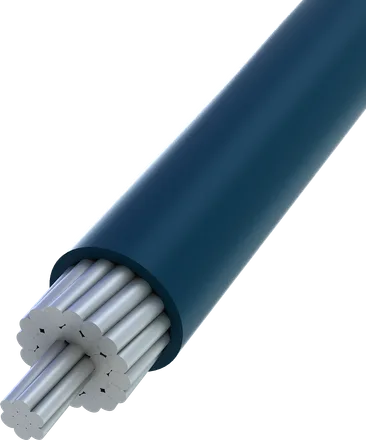
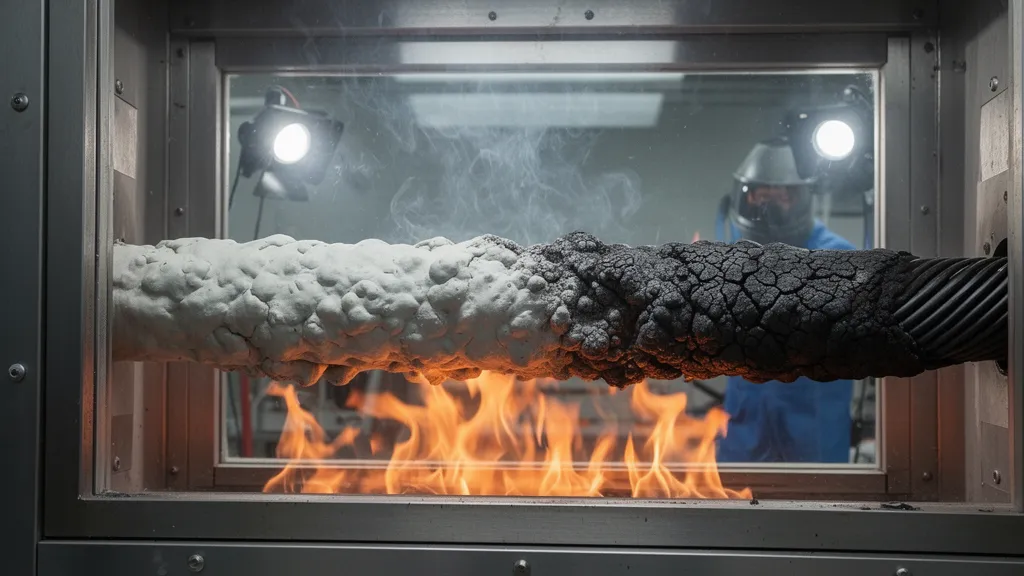
Cable insulation is the one component that must work for thirty years without maintenance, and engineers specify it along three independent axes: wall thickness as a physical dimension, dielectric capability as an electrical margin, and thermal endurance as a chemical budget. A data sheet quoting only voltage class leaves all three unanswered. Thickness is a dimension, not a guess. IEC 60502 gives nominal insulation thickness by voltage and conductor size, with a floor — commonly ninety percent of nominal — measured at every point around the circumference. The companion limit is eccentricity: the spread between thickest and thinnest wall, held within roughly fifteen percent of nominal on medium voltage cores. A thin side concentrates electric stress, and that is where a routine withstand test passes while service failure begins. Cross-section microscopy of a finished core settles the question in one measurement. Dielectric margin is where XLPE earns its place. Breakdown strength is quoted in kilovolts per millimetre, but working stress in a 12/20 kV cable sits far below that ceiling, because partial discharge and water treeing attack insulation at a small fraction of theoretical breakdown. Low loss tangent, high volume resistivity, gel content between seventy and ninety percent, and semiconductive screens bonded without voids are the measurable difference between a core that holds its field and one that does not. Thermal budget closes the specification. Cross-linked compounds run at ninety degrees continuous and withstand around 250 degrees for a short circuit; the hot-set test — elongation under load at 200 degrees and permanent set after cooling — separates a properly cured core from an undercrosslinked one that will flow and creep at the terminal. Oven ageing, thermal endurance and load-cycle tests in the type report project that behaviour onto decades. Acceptance is layered by design. Routine tests apply 2.5 to 4 U0 with partial discharge logged below ten picocoulombs, and field VLF with tan delta reveals moisture and treeing in a cable already laid. Ask for measured values per drum; voltage class alone is the least informative number on the nameplate.
China XINYA Power Cables Co., Ltd Email: [email protected] Email: [email protected] whatsapp: +86 15289885778 Website: https://www.power-cables.com