Armored Cable — Matching Armour to the Hazard It Actually Faces armored cable, steel wire armour vs steel tape armour, non-magnetic armour single core cable, adiabatic equation cable armour sizing, armour gland ip66 sealing,
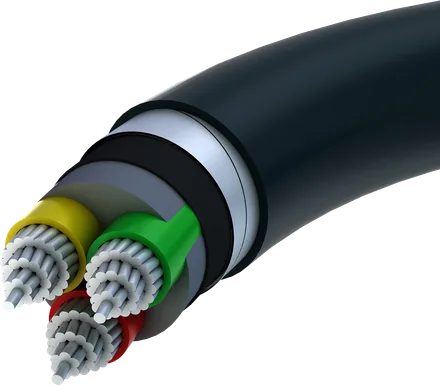
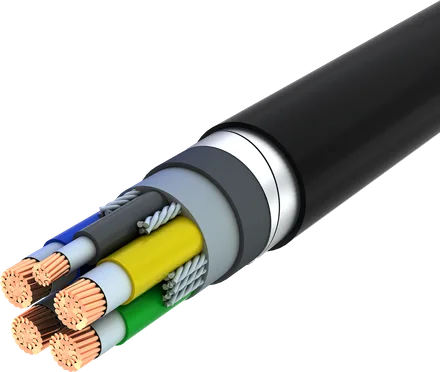
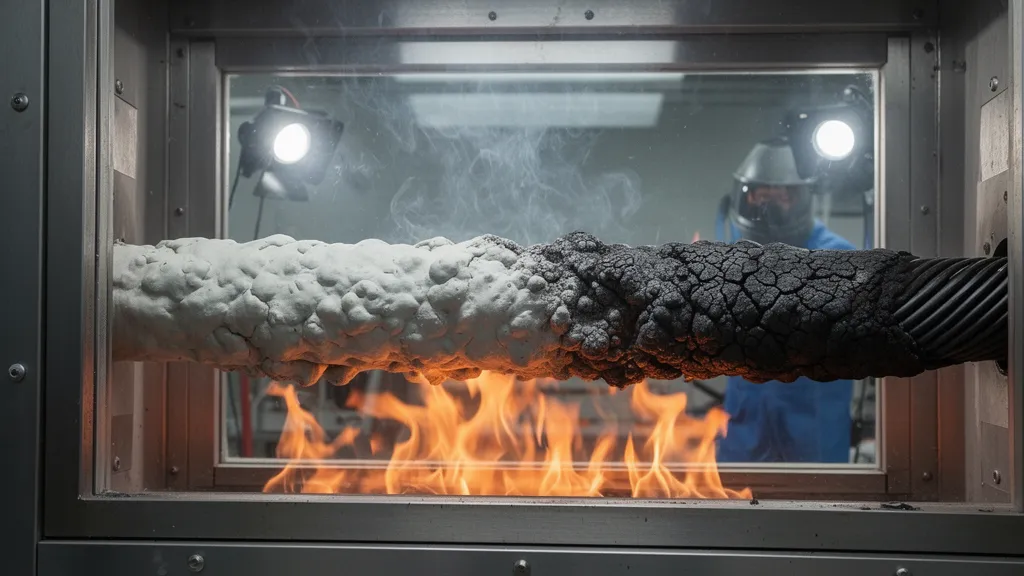
Armored cable protects against a defined list of mechanical threats, and specifying the wrong armour on that list is commoner than specifying no armour at all. Crushing and point loads, tensile pull, rodent attack and impact are four different problems; steel tape answers the first, steel wire answers the second, and nothing but correct routing answers careless excavation. Steel-tape armour — two counter-helically applied galvanized strips — resists crushing under backfill and foundation slabs, which is why buried low-voltage distribution so often specifies STA. Its penalty is weight, reduced flexibility and a magnetic path that single-core AC cables must avoid. For one-core circuits above roughly 250 mm², induced sheath voltage and circulating current in magnetic tape produce losses that can exceed the copper heating, so aluminium wire, austenitic stainless steel or non-magnetic wire armour becomes the engineering answer, not a cost option. Steel-wire armour grips tensile load in vertical risers, festoons and submarine routes; aluminium wire armour gives comparable fault-current capacity at lighter weight and non-magnetic behaviour. Where armour doubles as the protective conductor, verify it with the adiabatic equation, taking the k value the wiring code assigns to armour in thermal contact with the cable — the bonding jumper and its lugs then carry the calculated earth-fault duty, sized to survive the clearing time of the upstream device. The gland decides whether armour functions at all. Armour glands clamp the wires between two sealing elements, restoring sheath integrity while transferring pull; standard compression glands leave the armour unsecured and the seal compromised. For IP66 or washdown duty, barrier glands with elastomer compatible with the sheath compound and temperature range are required. At entry, bending radius should hold near twelve times tape-armoured and fifteen times wire-armoured overall diameter; pulling uses rollers, never direct capstan drive on armour. On site, cut armour without nicking the sheath, dress exposed wire ends to prevent laceration, and treat any sheath breach found during laying as a moisture fault to be repaired before burial.
China XINYA Power Cables Co., Ltd Email: [email protected] Email: [email protected] whatsapp: +86 15289885778 Website: https://www.power-cables.com