A Fire Resistant Control Cable Must Survive Flame Water and Shock
control cable,fire resistant control cable,BS 6387 CWZ cable,EN 50200 PH120 cable,mica tape fire survival cable
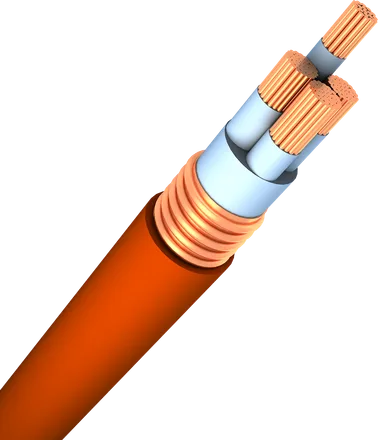
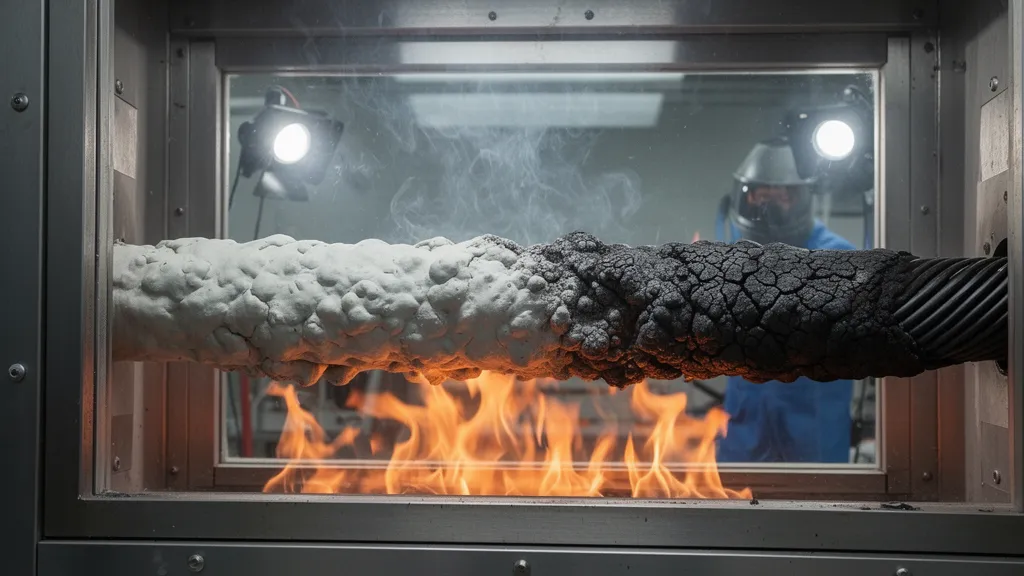
Fire alarms, smoke extractors and lift control circuits keep working — or they do not. The difference lies in whether the control cable maintains circuit integrity when the fire reaches it, and three test families define what that claim actually means. IEC 60331 applies direct flame at about 750 °C while passing current through every conductor, graded by duration: 30, 60, 90 or 120 minutes. A cable that keeps conducting through the whole flame period earns its class. EN 50200 sharpens this for alarm circuits: flame near 842 °C plus mechanical shock on the test ladder, producing the PH30 to PH120 ratings — and after flame exposure, the sample must still switch a current at the circuit's rated voltage. The hot-shock step is the one thermoplastic-insulated cable cannot fake. BS 6387 goes further by simulating real fireground hazards, one per category. Category C: 650 °C for three hours with sinusoidal vibration on the fixings. Category W: 750 °C for three hours with a calibrated water spray, because sprinklers and fire brigade jets hit cables. Category Z: 950 °C for thirty minutes with a hammer striking the sample, because burning structures fall on them. A "CWZ" marking means the cable passed all three — and the insulation behind that result is never ordinary PVC. Construction explains the outcome. Fire-resistant control cables wrap each core in mica tape: mica is a sheet silicate that neither burns nor melts, and under fire the binder chars away while the mica sinters into a continuous ceramic shell that keeps adjacent conductors apart long after organic insulation is gone. Silicone rubber or cross-linked compounds serve as the practical insulation; low-smoke-halogen-free sheaths protect occupants from the products of combustion, and copper tape or wire armour prevents the mechanical categories from defeating an otherwise intact circuit. Two dates decide specification: the test certificate per IEC 60331-21 or BS EN 50200, and the circuit's required survival time under the local fire code. The cable's job is not to stop fire spreading — that is the flame-propagation test's question. Its job is to keep the signal alive while the fire is at it.
China XINYA Power Cables Co., Ltd Email: [email protected] Email: [email protected] whatsapp: +86 15289885778 Website: https://www.power-cables.com