
TypeYJV22 · YJV32 · VV22
Armoured Power Cable
Mechanical protection built for underground and direct-burial routes.
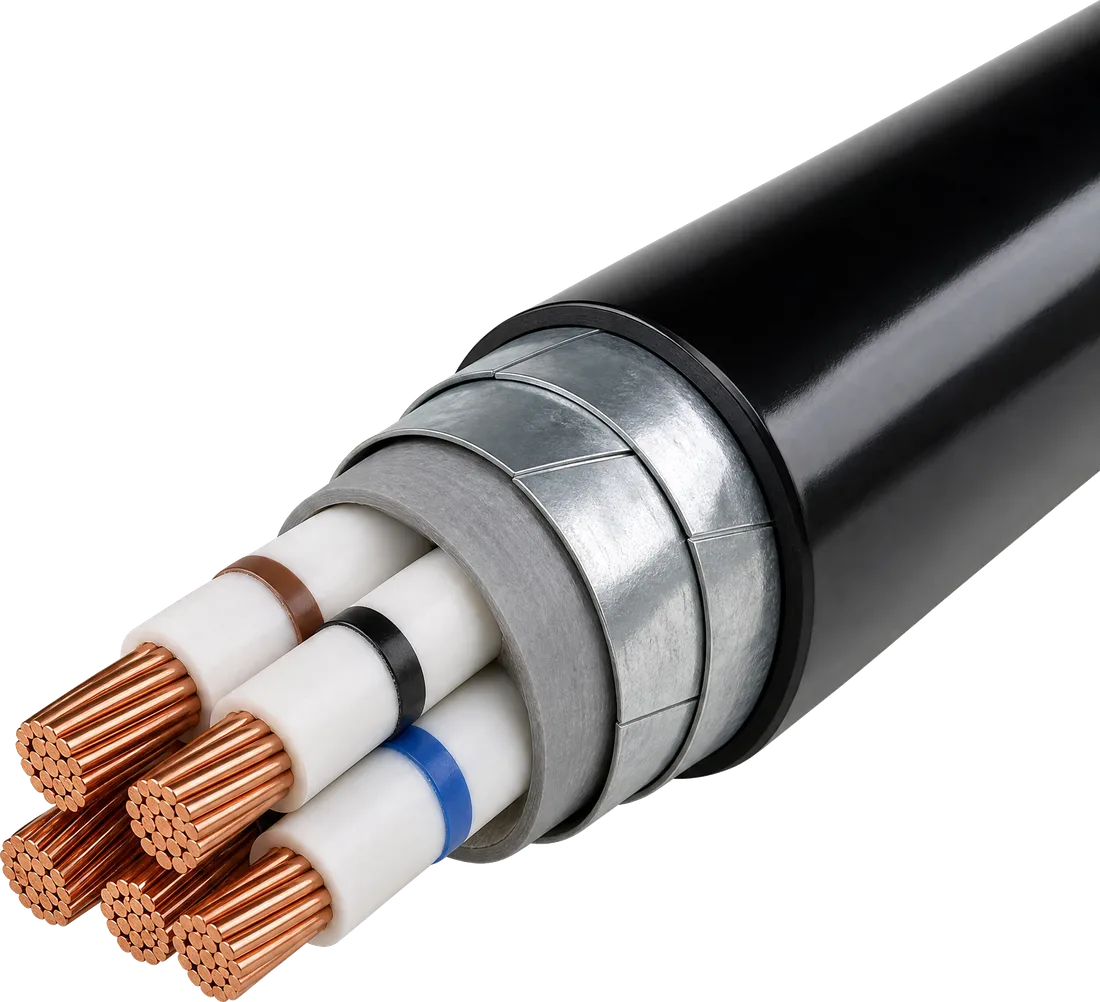
XLPE and PVC insulated power cables with steel-tape or steel-wire armour between the bedding and the outer sheath. The armour takes soil pressure, digging damage and rodent or termite attack, making these the standard underground power cables for direct burial, road crossings, open trays and shafts.
Technical data
- Rated voltage
- 0.6/1 kV — 26/35 kV
- Armour
- Steel tape (22/23) · steel wire (32/33) · interlocked
- Conductor
- Copper / aluminium
- Installation
- Direct burial · duct · tray · tunnel
- Standards
- GB/T 12706 · IEC 60502
When an underground power cable needs armour
Direct burial exposes a cable to soil pressure, stones, digging tools and, in many regions, termites and rodents. A metal armour layer between the inner bedding and the outer sheath takes these loads so the insulation does not. Cables pulled into ducts or laid in protected tunnels can often stay unarmoured; cables buried directly in the ground, laid on unprotected trays or crossing roads normally need armour. Always follow the burial depth and protection rules of the local electrical code.
Steel tape, steel wire or interlocked armour
- Steel-tape armour (YJV22 / YJLV22, VV22): two overlapping galvanised steel tapes; good crush resistance for direct burial on level routes.
- Steel-wire armour (YJV32 / YJLV32): a layer of galvanised steel wires; also carries tensile load on steep slopes, shafts and long vertical runs.
- Interlocked armour: a helically wound metal strip, as used in our AC90 aluminium alloy cable, combining protection with flexibility for building routes.
- Single-core AC circuits use non-magnetic armour so that induced currents do not overheat the cable — tell us the circuit type when you ask for a quotation.
Our armouring equipment →AC90 interlocked armoured alloy cable →
What to include in your inquiry
Rated voltage, conductor material and cross-section, number of cores, armour type, installation method (direct burial, duct, tray or tunnel), route length and destination port. For utility tenders, attach the cable schedule and the standard to be followed (IEC 60502 or the local national standard).


