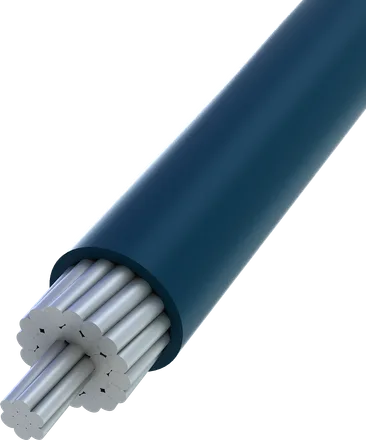
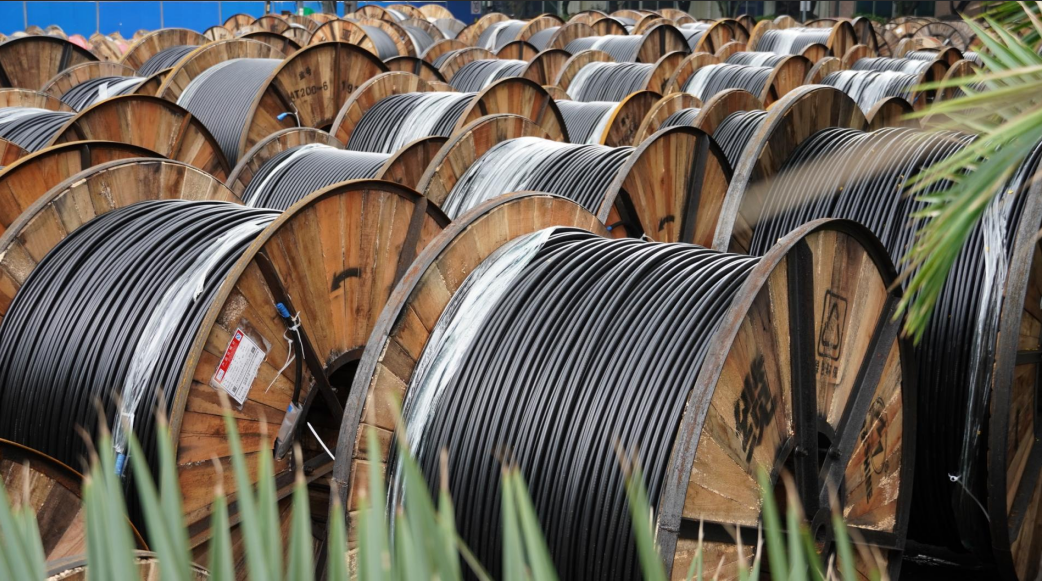
An underground power cable runs below grade in a trench or duct, and its design margins differ sharply from overhead lines because heat, moisture and mechanical stress act on it invisibly for decades. A typical underground power cable is XLPE insulated with copper or aluminum conductors, a water-blocking swelling tape, and a polyethylene sheath chosen for soil chemical resistance. Burial depth beneath streets commonly reaches 0.9 to 1.2 metres, with warning tape laid above the cable so excavators receive visible notice before contact. The critical variable is thermal resistivity of the surrounding soil: damp compacted sand near 1.0 K.m/W allows rated current, while dry backfill forces derating and shortens life. Duct banks simplify future replacement but trap heat, so ampacity must follow the boundary condition stated in the standard. Hand-dig a trial hole, keep bedding sand free of rocks, and pull cable on rollers to protect the sheath. Fault location combines time-domain reflectometry with acoustic pinpointing after a surge is applied to the weak point.
China XINYA Power Cables Co., Ltd Email: [email protected] Email: [email protected] whatsapp: +86 15289885778 Website: https://www.power-cables.com