
Kenya is expanding electricity access in rural and low income communities through the fourth phase of its Last Mile Connectivity programme, backed by EIB Global.
Harriet Ongaki, media officer at the European Investment Bank’s regional hub in Nairobi, Kenya explains that the project is designed to connect homes, schools and small businesses that remain underserved despite significant improvements in national electrification. Electricity access in Kenya rose from 37% in 2013 to 79% in 2023, while the government is targeting 95% grid coverage by 2030.
The programme will target households located within 600 metres of existing transformers, upgrade distribution networks and remove some of the upfront costs that prevent low income families from connecting to the grid.
The fourth phase will focus on connections around 3,735 existing distribution transformers. It will also install 940 new transformers and expand medium and low voltage distribution networks.
The project is expected to reach 296,000 households and small businesses across 32 of Kenya’s 47 counties, benefiting about 1.4 million people. EIB Global has committed €60 million to the implementation phase of the wider €180 million project.
The programme is co funded by the European Commission, the African Development Bank and Agence Française de Développement. It supports the European Union’s Global Gateway priorities on clean energy and digital connectivity.
Improved access to electricity is expected to support economic activity by enabling small and medium sized businesses to operate more efficiently and extend their working hours.
For households, electricity can improve access to communication, information and entertainment services while reducing dependence on polluting fuels. It is also expected to improve indoor air quality and support the use of electric cooking appliances.
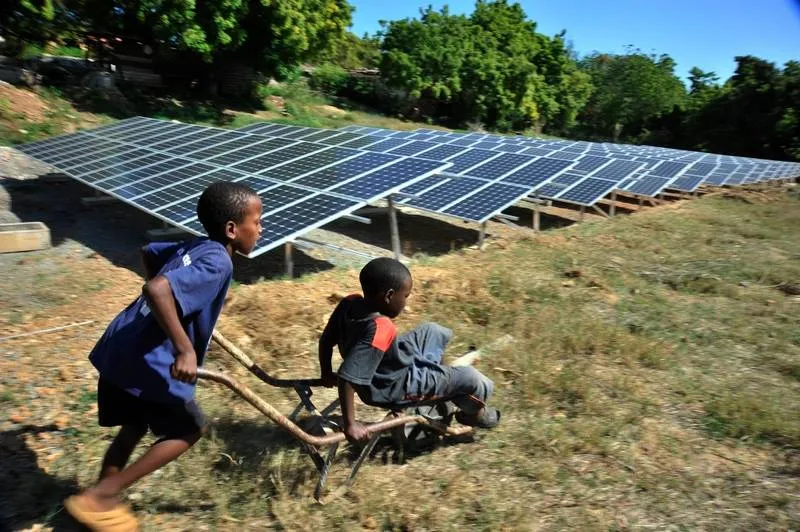
Schools and pupils are likely to benefit from longer study hours and improved access to digital learning tools. In communities where homes remain without electricity, some children still rely on streetlights to complete their homework.
The programme is also expected to support women’s economic participation by improving household security, reducing time spent on energy related tasks and creating new opportunities for education, entrepreneurship and income generation.
Kenya’s rural electrification drive forms part of a broader effort to achieve universal electricity access by 2030 through a combination of grid expansion, renewable energy, mini grids and standalone systems. The Last Mile Connectivity Project has already played a major role in extending electricity to rural communities.
David Oloo, an energy specialist for sub Saharan Africa at the European Investment Bank, said rural electrification can improve access to basic services, increase productivity and strengthen social inclusion.
He said the initial costs of installation, inspection and household wiring had remained a major barrier for low income families. The programme is intended to reduce that barrier and make first time connections more affordable.
For families such as that of 11 year old Peter Lusike in Turkana County, reliable electricity could mean an end to studying under a streetlight and provide access to better educational and economic opportunities.
Source: greenbuildingafrica