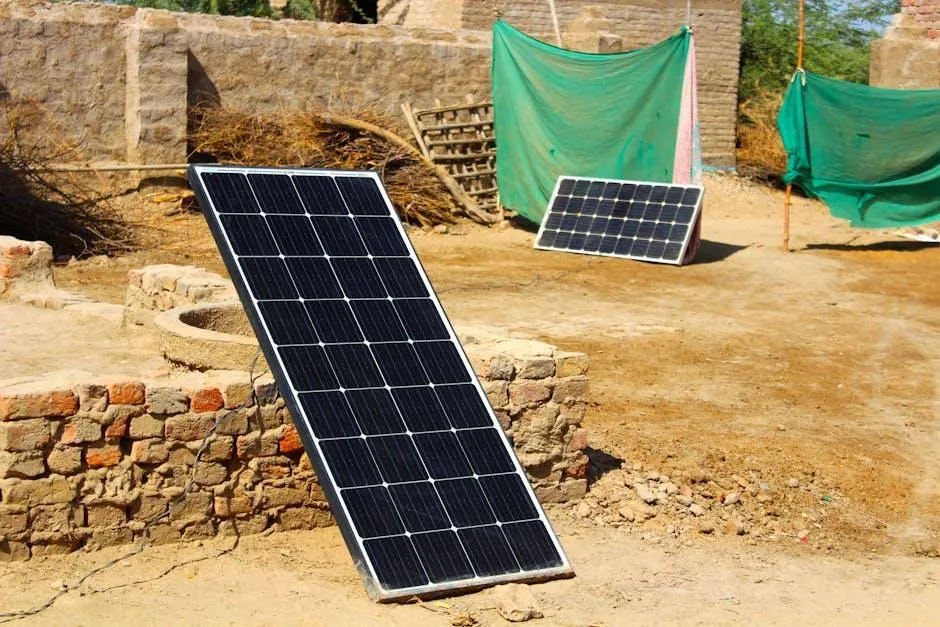
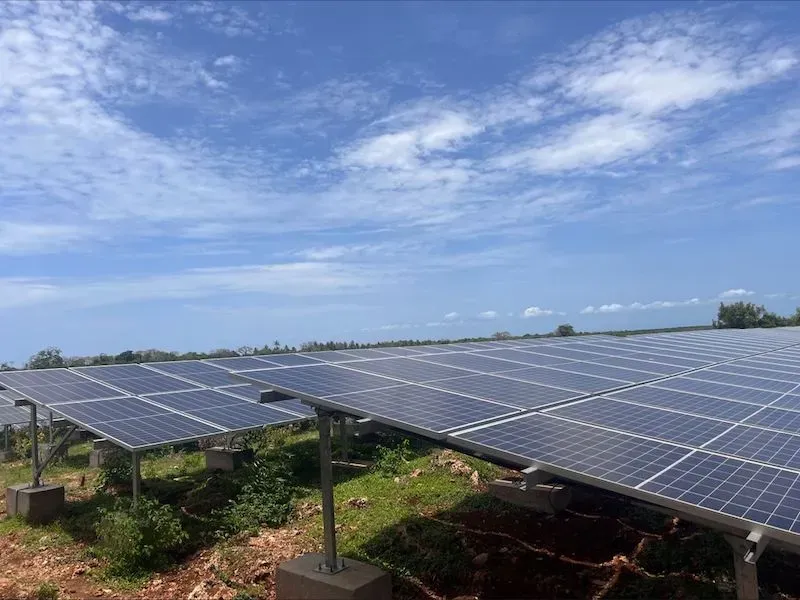
Kenya Power is rolling out 80 solar mini-grids valued at KSh6.45 billion across eight counties as the country accelerates efforts to electrify communities that remain too remote for conventional national-grid connections. The projects, being implemented under the Kenya Off-Grid Solar Access Project, are expected to connect about 34,000 households while also supporting schools, health facilities, businesses and other community services. The latest activity includes development in Tana River County, where five mini-grids worth KSh270 million are expected to serve more than 1,300 households. Key Overview Kenya Power is rolling out 80 solar mini-grids worth KSh6.45 billion. Approximately 34,000 households are expected to benefit from the projects. The eight counties are Mandera, Wajir, Garissa, Tana River, Lamu, Narok, Kilifi and Kwale. Tana River will receive five mini-grids worth KSh270 million, targeting 1,353 households. The programme forms part of the broader Kenya Off-Grid Solar Access Project (KOSAP). KOSAP combines mini-grids with stand-alone solar systems, solar-powered water pumps and clean-cooking solutions. The programme targets remote communities where national-grid expansion can be costly or technically difficult. Solar Mini-Grids Target Kenya's Underserved Areas The current rollout will deploy 80 solar mini-grids across eight counties and is expected to bring electricity to around 34,000 households in predominantly remote areas. Mandera, Wajir, Garissa, Tana River, Lamu, Narok, Kilifi and Kwale are included in the latest deployment. These areas include communities where population density and distance from existing electricity infrastructure can make conventional grid extension expensive. Solar mini-grids offer an alternative by generating electricity close to communities and distributing it through smaller local networks. The investment forms part of Kenya's wider off-grid electrification programme, which targets underserved counties using technologies suited to remote and sparsely populated settlements. Tana River Gets KSh270 Million Investment Tana River County is receiving five mini-grids valued at approximately KSh270 million, with the projects expected to directly benefit 1,353 households. One of the sites is Nanighi in Bura Subcounty, where officials conducted a project inspection on October 3. Beyond household connections, the development includes support for local public services, including a planned extension of the maternity ward at Nanighi Dispensary. This reflects the wider economic case for rural electrification. Reliable electricity can support refrigeration at health facilities, extend operating hours for small businesses, improve communications and provide power for schools and other community institutions. For rural enterprises, access to electricity can also make equipment such as milling machines, refrigeration units, water pumps and digital payment systems easier to operate. Context is everything. Stay ahead of shifting trends with today’s market updates, and uncover emerging opportunities using the Serrari Group Market Index and Marketplace. Then, take control of your own financial future by exploring our Money & Life Reset Transformation Blueprint ™ to build stronger habits, create better systems, and design a path toward lasting wealth. KOSAP Goes Beyond Household Electricity KOSAP was designed to increase access to modern energy services in parts of Kenya that have historically experienced low electricity access. The broader programme uses several approaches rather than relying exclusively on mini-grids. These include stand-alone solar home systems, solar installations for community institutions, solar-powered water pumping and clean-cooking technologies. Official project documentation identifies Kenya Power, the Ministry responsible for energy and the Rural Electrification and Renewable Energy Corporation as key implementing institutions. The project originally targeted 14 underserved counties covering a large portion of Kenya's land mass, including areas where households are widely dispersed. Kenya Power's current 80-mini-grid rollout therefore represents part of a wider national effort to extend electricity access through decentralised renewable-energy systems. Solar Power Supports Kenya's Electrification Strategy Solar mini-grids are particularly suited to areas where extending transmission and distribution infrastructure over long distances would be uneconomical. Kenya's energy planning has increasingly combined national-grid expansion with off-grid solar solutions for remote areas, allowing electrification programmes to select technologies according to population density, location and expected electricity demand. The approach also reduces reliance on diesel generation in isolated electricity systems and takes advantage of Kenya's strong solar resources. Importantly, rural electrification has economic implications beyond the number of new electricity connections. Providing dependable power can improve healthcare delivery, support irrigation and water supply, enable small-scale manufacturing and create opportunities for businesses operating in areas previously constrained by limited energy access. 34,000 Connections Could Unlock Wider Economic Activity The planned 34,000 household connections represent the immediate measure of the programme, but its longer-term impact will depend on how effectively electricity is converted into productive economic activity. Businesses need affordable and reliable power, while public facilities need equipment and infrastructure capable of using the new electricity supply effectively. Kenya's wider off-grid strategy therefore increasingly links electrification with what is known as the productive use of energy — using electricity to generate income, improve public services and support local economic development. If the 80 projects are completed successfully, the KSh6.45 billion rollout could demonstrate how decentralised solar infrastructure can complement Kenya's national grid while connecting communities that would otherwise have to wait considerably longer for conventional electricity infrastructure. Sources: People Daily / Kenya Power / World Bank / State Department for Energy Your financial future isn’t something you wait for—it’s something you build.The real question is: when do you begin? Move beyond simply staying informed.Navigate the markets with clarity—track trends through the Serrari Group Market Index, uncover opportunities in the Serrari Marketplace, and build practical knowledge with our Curated Wealth Builder Platform. Stay connected to what truly matters.Get daily insights on macro trends and financial movements across Kenya, Africa, and global markets—delivered through the Serrari Newsletter. Growth opens doors.Advance your career through professional programs including ACCA, HESI A2, ATI TEAS 7 , HESI EXIT , NCLEX - RN and NCLEX - PN, Financial Literacy!🌟—designed to move you
Source: serrarigroup.com