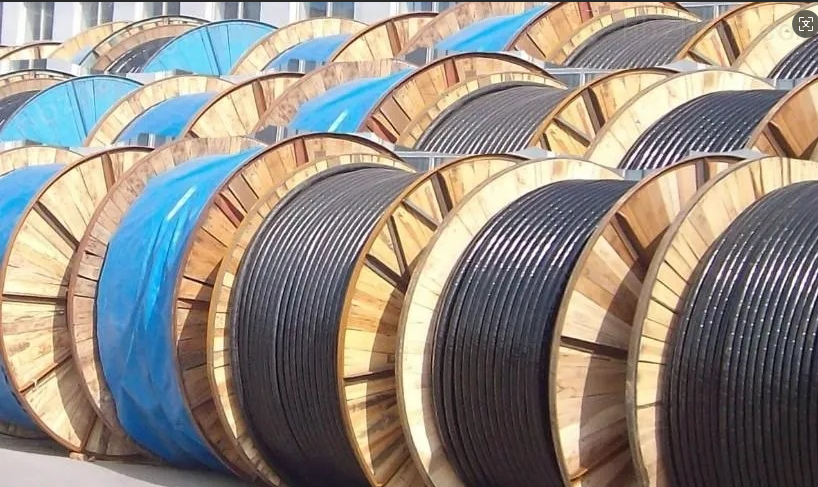
Electric Wire and Cable Are Specified by Standard Families Not Adjectives
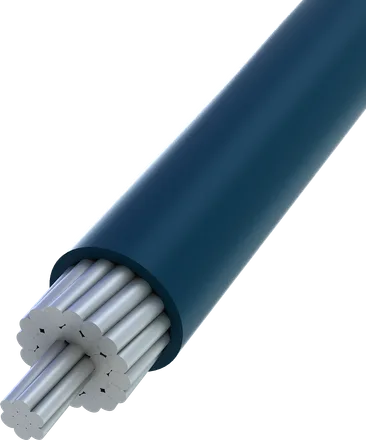
Electric wire and cable is a family name covering everything from a single copper core inside a wall to a steel-reinforced aluminium strand crossing a valley. Professional buyers order inside this family by standard designation, because adjectives such as "heavy duty" or "industrial grade" are not specifications. Two parallel coding systems govern the market. The European harmonised system, EN 50525, encodes information in every character. H05VV-F is a flexible PVC sheathed cord rated 300/500 V; H07V-K is a flexible single-core PVC insulated wire rated 450/750 V, where the letter after the V states the conductor — U solid, R stranded, K flexible. The leading digits fix the voltage class, and insulation thickness follows from it: material built for a 300/500 V line cannot pass spark testing on a 450/750 V line. North American building wire codes by material and temperature instead. THHN means thermoplastic high heat resistant with a nylon overcoat, rated 90 °C in dry locations; the dual marking THHN/THWN-2 adds 90 °C in wet locations, both at 600 V. Sizes run in AWG, and metric crossover is a frequent purchasing trap: 14 AWG is nominally 2.08 mm², roughly 17 % below the 2.5 mm² it is often assumed to replace. Regional practice adds more species. UK domestic circuits are wired in flat twin and earth 6242Y cable at 300/500 V, with a bare protective conductor laid alongside the insulated cores. At the other extreme, overhead line "wire" has no insulation at all: ACSR and AAAC stranded conductors to IEC 61089 use a steel core for tensile strength and aluminium layers to carry current. Before any price discussion, establish which coding system the job specification was written in. A designation can be decoded and verified; an adjective cannot.
China XINYA Power Cables Co., Ltd Email: [email protected] Email: [email protected] whatsapp: +86 15289885778 Website: https://www.power-cables.com