Aluminum Alloy Cable Solves the Connection Problem Pure Aluminum Created
aluminum alloy cable, AA-8000 conductor, aluminum cable termination, ASTM B800 alloy, aluminum versus copper conductor
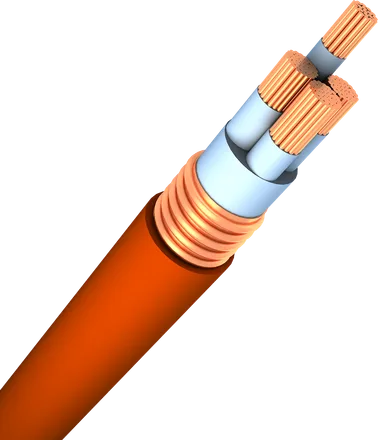
Aluminum has carried distribution current for a century because it is cheap, abundant and light — roughly 30 per cent of copper's weight per unit volume. Its historical weakness was never conductivity. It was the termination, and AA-8000 series alloys were developed specifically to fix it. Three behaviours made early pure-aluminum branch wiring fail at connections. Aluminium is soft: a screw clamp displaces metal under the contact point, so pressure falls over time. It creeps — permanent deformation under steady stress — which loosens joints further. Its oxide is an electrical insulator with a melting point far above the metal's, so a scraped surface re-coverts within seconds and raises contact resistance exactly where current is concentrated. The 1970s investigations into residential fires found the pattern at connections, not in the run. AA-8000 alloys — 8173, 8175, 8176 in North American practice, specified in ASTM B800 and required by UL 44 and the NEC for solid 12 to 8 AWG branch conductors — add iron and small amounts of copper, magnesium or silicon. Iron forms intermetallic phases that pin grain boundaries, raising creep resistance several times over pure aluminium while holding conductivity near 61.5 per cent IACS. The result is a conductor that keeps its shape in a clamp under thermal cycling, which is the property the connection actually depends on. Sizing follows resistance rather than preference: aluminium's resistivity is about 1.6 times copper's, so equal ampacity needs roughly 1.25 times the cross-section, and compacted sector-shaped strand sets above 93 per cent fill recover roundness and reduce surface film. Flexibility improves, and bending radius drops near seven cable diameters against copper's ten. Specification lives in the connection hardware. Alloy cable must terminate on connectors rated for aluminium, torqued to the listed value with a calibrated wrench, cleaned and anti-oxidant treated per the manufacturer's method. Thermal expansion mismatch, not the conductor, drives loosening. Aluminum alloy cable is a materials answer to a hardware problem. Buy the alloy and the fittings as one system.
China XINYA Power Cables Co., Ltd Email: [email protected] Email: [email protected] whatsapp: +86 15289885778 Website: https://www.power-cables.com