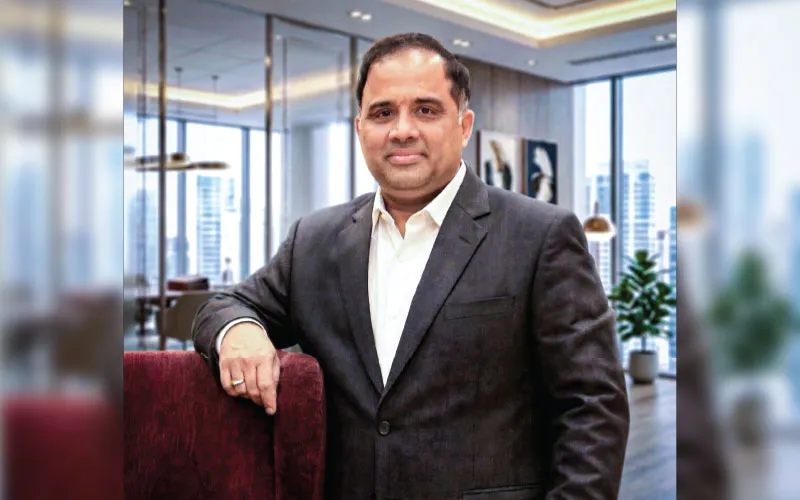
Wire & Cable India: To begin with, could you give us an overview of Gopalan Metals and Gopalan Wires & Cables, including your product portfolio, manufacturing capacities, key end-use industries, and market presence?
Pramod C: Gopalan Metals is a copper manufacturing company under the Gopalan Enterprises group. Established in 2023, we are headquartered in Bengaluru, with our manufacturing facility located in the KIADB industrial area in Hoskote. Our product portfolio spans the copper value chain, including copper rods, busbars, bare and tinned annealed copper wires, fine and superfine copper wires, bunched copper conductors, continuous cast copper rod(OFC), copper strip and premium OFC rod, and TPC-covered copper wires and strips conductor.
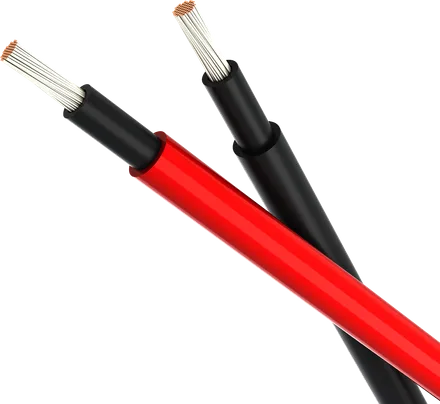
Under our Gopalan Wires & Cables vertical, we manufacture PVC insulated cables built on 99.97% pure copper conductors, offered in FR, HRFR, FRLS and ZHFR insulation grades and conforming to IS 694:2010, with conductors meeting IS 8130:2013. These cables are designed for fixed wiring in conduits and under plaster and for appliance wiring and distribution applications, with standard coil packing of 90m, 100m, 180m and 360m.
These products serve a wide industry base spanning power and electrical, automotive, telecommunications, construction and industrial manufacturing, transformers and switchgear, solar energy, railways, marine and defence, and precision electronics and robotics applications where high-purity conductivity is non-negotiable. Operationally, we run on an SAP-integrated backend across MM, PP, SD and FI/CO modules for real-time inventory tracking and precision scheduling, and we position ourselves as a high-responsiveness technical partner to OEMs and industrial clients rather than as a purely commodity supplier. We are actively expanding our footprint across domestic and international markets, with renewable energy and power distribution as key growth areas.
WCI: Copper has become increasingly strategic for infrastructure, renewable energy, electric mobility, and digital connectivity. How do you see its role evolving in supporting India’s long-term growth?
PC: Copper is fast becoming one of the foundational metals of India’s next growth cycle, shifting from a conventional industrial input to a strategic enabler of the energy transition. The International Energy Agency has noted that renewable power infrastructure such as solar and wind requires between 2.5 and 7 times more copper than equivalent fossil-fuel-based generation, depending on the technology. Global refined copper demand itself is projected to reach around 33 million tonnes by 2035 and 37 million tonnes by 2050 under the IEA’s stated policy scenario, while the International Copper Association estimates demand could reach about 50 million tonnes by 2050.
In India specifically, the Centre for Social and Economic Progress projects copper demand in conventional sectors alone will reach 3.24 million tonnes by FY2030, with additional demand layered on from energy-transition uses such as EVs, grid infrastructure and renewables. On the mobility side, a battery electric vehicle uses significantly more copper than a conventional vehicle, largely for motors, batteries and wiring harnesses. With India targeting 500 GW of installed non-fossil power capacity by 2030, and having already crossed 262.74 GW as of November 2025, the grid, transmission and cabling build-out this demands places copper squarely at the centre of India’s infrastructure, mobility and digital connectivity story for decades to come.
WCI: Despite growing domestic demand, India continues to rely on imports for several copper products. What steps are needed to strengthen domestic copper manufacturing and achieve greater self-reliance?
PC: The self-reliance gap is real and widening. In FY2024-25, India produced approximately 497,000 metric tonnes of refined copper domestically, a 7.1% increase over the previous year, yet the country still imports over 90% of its copper concentrate requirement, a share projected to rise to as much as 97% by 2047. This gap traces back significantly to constrained domestic smelting and refining capacity, a shortfall that widened after a major smelter closure in 2018 that once met over a third of India’s refined copper demand.
Closing this gap needs sustained investment across the value chain, not only at the mining end, and that investment is underway. New smelting capacity is also coming online, alongside a stronger push toward domestic copper recycling and organised scrap collection as a supplementary raw-material source, since global mine supply alone will not keep pace with demand. For manufacturers like us further down the value chain, in wires, cables and conductors, this upstream investment is what will eventually translate into more stable domestic cathode and rod availability.
Under our Gopalan Wires & Cables vertical, we manufacture PVC insulated cables built on 99.97% pure copper conductors, offered in FR, HRFR, FRLS and ZHFR insulation grades and conforming to IS 694:2010, with conductors meeting IS 8130:2013.
WCI: Supply chain resilience has become a key priority for manufacturers. How can India’s copper and wire & cable industry reduce import dependence while building a more robust and competitive supply chain?
PC: Resilience here needs to be built on two fronts: reducing concentration in import sources and strengthening the secondary, recycled-copper stream. A stock-and-flow study developed by Fraunhofer ISI for the International Copper Association found that India currently sources less than half, around 46%, of the copper needed for semi-finished and finished goods from primary (mined and refined) routes, with the remaining 54% coming from secondary sources, largely the recycling of new and old scrap. That secondary route is a genuine strategic asset, though it needs more organised, formal recycling and e-waste recovery infrastructure to scale it responsibly and consistently.
At the same time, import dependence currently concentrated among a handful of source countries needs geographic diversification, faster ramp-up of announced domestic smelting and mining capacity, and continued policy support for native refining. The IEA’s own modelling under its Net Zero Emissions scenario points to a nearly 20% supply deficit, equivalent to about 6 million tonnes globally, by 2030 if energy-sector demand alone grows as projected, so this isn’t a challenge unique to India but one where early investment in resilient, integrated domestic capacity becomes a genuine competitive advantage.
WCI: How does an integrated manufacturing ecosystem—from copper processing to finished wires and cables—help improve product quality, operational efficiency, and supply consistency?
PC: An integrated ecosystem from the copper rod to the finished wires and cables gives the manufacturer far tighter control over the variables that determine quality: conductivity, consistency of dr
Source: wirecable